
Elk County Arrest Records and Charges
An Elk County arrest record is the law-enforcement side of the event. It may involve an arresting agency, booking, custody status, bond or hold information, and release or transfer. Research did not locate an official Elk County online jail roster, so current booking questions should go to the Elk County Sheriff at 620-374-2108. The court charge record begins later, when the County Attorney files or declines formal charges.
For the court side, the County Attorney and Clerk of the District Court are central. The County Attorney decides what charges to file and prosecutes matters before the court. The Clerk of the District Court maintains the case record after filing. The full criminal case file, including sentencing and final judgment, is covered in Elk County criminal court records.
Who Files Elk County Court Charges
The Elk County Attorney page names Jill Ranee Gillett as County Attorney and Sara McCabe as Administrative Assistant. The page states that the County Attorney is elected to represent the interests of county citizens and, when requested by a judge, the State in matters involving violations of law. It also says the County Attorney is the prosecutor in matters before the court.
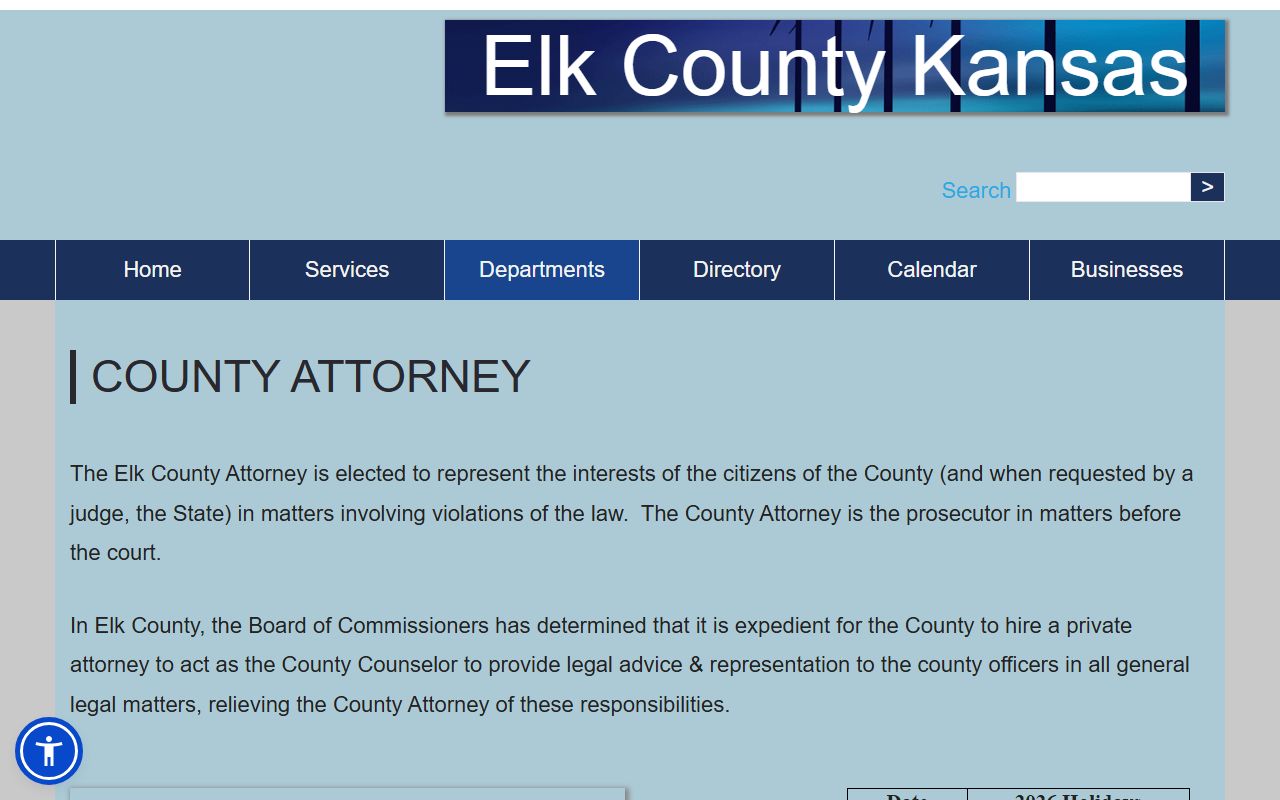
That source anchors the arrest-to-charges path: the sheriff may arrest, but the County Attorney controls the formal court charge filing.
Elk County Attorney
127 N. Pine, 2nd Floor
PO Box 415
Howard, KS 67349-0415
620-374-3507
coattorney@elkcountyks.org
Search Elk County Arrest Records and Charges
There is no single Elk County page that combines booking, prosecutor review, and court disposition. Use the channel that matches the question. Call the sheriff for custody or booking status. Use Kansas CaseSearch for District Court charge records once formal charges are filed. Contact the Clerk of the District Court if a public file requires appointment review or certified copies.
- For custody, call the Elk County Sheriff at 620-374-2108.
- For charges filed after arrest, search Kansas CaseSearch by name, case number, or citation.
- Open the court case and read each count separately for statute, level, plea, status, and disposition.
- For missing online details, ask the Clerk of the District Court at 620-374-2370 about public file review or written requests.
- For a city citation, use Howard Municipal Court procedures rather than assuming a District Court charge exists.
The 13th Judicial District says court files open to the public may be reviewed by appointment and that written information requests are required. A case number is expected for file-review appointments.
If a person has only an arrest date and name, start with the sheriff for booking status and then search CaseSearch by name. Once the case number is known, use that number for clerk appointments, copy requests, and any certified charge or disposition record.
Charges After Arrest Documents
The first court charge document depends on how the case is filed. Kansas district criminal files may include complaints, charging documents, probable-cause affidavits if public, appearance and bond records, plea entries, diversion agreements when filed, sentencing orders, probation conditions, journal entries, and docket events.
| Document | Filed By | How It Is Used |
|---|---|---|
| Complaint | Prosecutor or law-enforcement supported filing | Starts many criminal cases and identifies the alleged charge. |
| Information | Prosecutor | Formal charging document used in many felony or misdemeanor prosecutions. |
| Indictment | Grand jury | Formal accusation after grand jury action, less common than prosecutor-filed documents. |
Elk County Charge Status
A charge list is not the final outcome. Charges can be amended, reduced, dismissed, added, resolved through diversion, or carried to conviction and sentence. The Pay a Fine research notes that the Elk County Attorney's Office has a pretrial diversion program and directs eligibility questions to the County Attorney. Diversion can mean a charge is filed but later resolved without a conviction if all terms are completed.
| Status | What It Means |
|---|---|
| Pending | The charge is open and no final disposition appears. |
| Amended | The prosecutor changed the count, statute, severity, or wording. |
| Reduced | The charge moved to a lower severity or lesser offense. |
| Dismissed | The court or prosecutor ended that count without conviction. |
| Diversion | The prosecutor-approved program may avoid conviction if completed. |
| Convicted | The defendant was found guilty or entered a plea accepted by the court. |
Note: Always read the disposition for each count because one case can have both dismissed and convicted charges.
Charge vs Conviction
Arrest records often show why a person was taken into custody. Court charge records show what the prosecutor actually filed. A conviction shows the court outcome. These differences matter for employment, licensing, housing, and personal record review, but this site is not a consumer reporting agency and cannot be used for FCRA-regulated decisions.
| Topic | Charge | Conviction |
|---|---|---|
| Basic meaning | An accusation filed in court. | A plea or finding that establishes guilt. |
| When it appears | Early in the case after filing. | After plea, verdict, or judgment. |
| Can change | Yes, charges may be amended or dismissed. | Can later be appealed, corrected, or sometimes expunged. |
Public Access to Elk County Charges
Kansas public-record rules govern access to charge records, but court records and county administrative records are distinct. K.S.A. 45-220 covers procedures for access, copies, custodians, and office hours. Written court-record requests use the District Court process, while noncourt county records may use the county clerk KORA process.
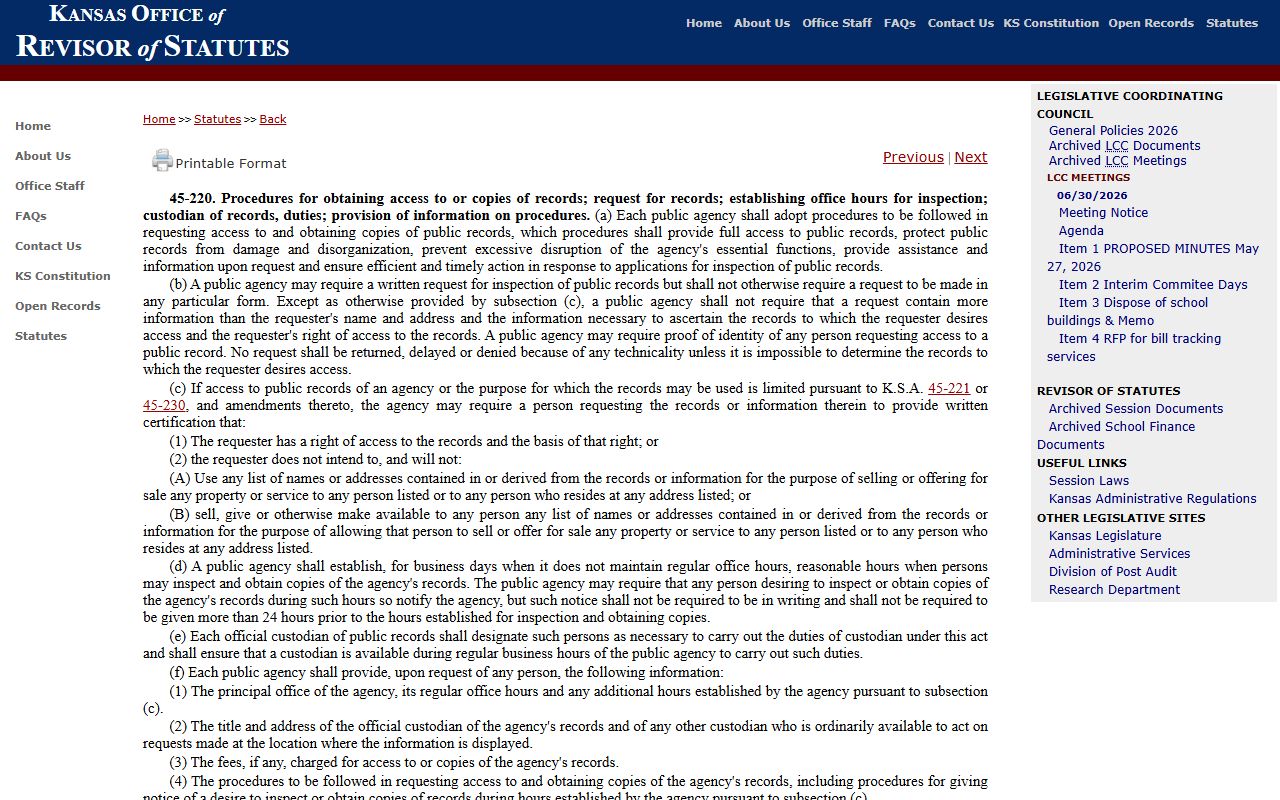
This statute helps explain why a charge record request may involve office procedures, copy fees, and response timing rather than instant online access.
The official court copy and research fees from the 13th Judicial District include $0.50 per page, $12 per hour for research, $1 minimum certification, $3 minimum authentication, and $50 per recorded hearing up to one day.
Federal Charges Are Separate
Some arrests or charges in Kansas can be federal rather than Elk County District Court matters. The U.S. Attorney's Office for the District of Kansas prosecutes federal cases, and federal case records are searched through federal court systems, not the Elk County clerk.
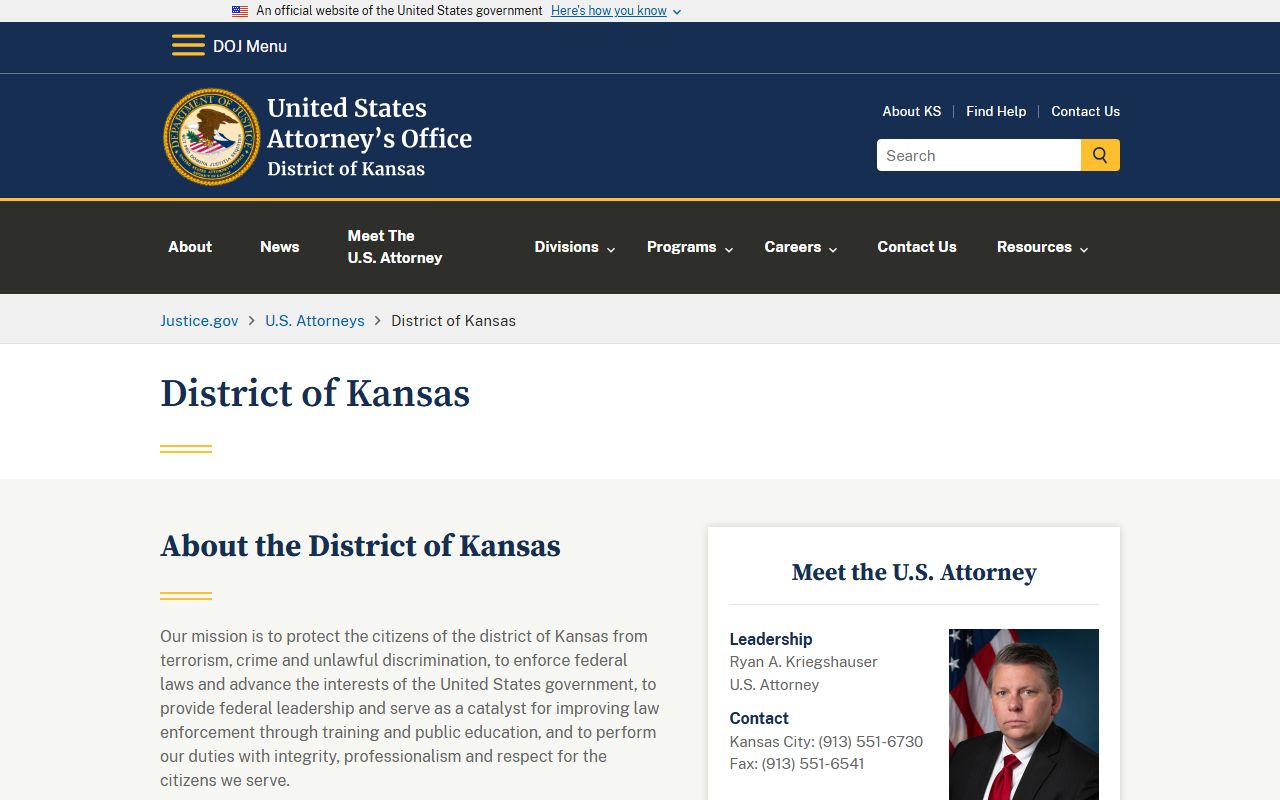
Use federal prosecutor and court sources only when the charge is federal or the case appears in federal court.
The U.S. Court of Appeals for the Tenth Circuit handles federal appeals from Kansas federal cases.
An appeal source does not replace the original trial record, but it can matter after a federal conviction or order.
The U.S. Bankruptcy Court for the District of Kansas is a federal court source for bankruptcy, not for Elk County arrest charges.
Its inclusion is useful only to keep federal bankruptcy records separate from criminal charge records.
Restricted Elk County Charge Records
Some charge records are restricted. Juvenile records are governed by Kansas Chapter 38. Sealed and expunged records may not appear in public search results or may show limited docket information. Adoption, mental health, care and treatment, victim information, personal identifiers, protection-order safety details, and active investigation material may be redacted or withheld.
Adult expungement under K.S.A. 21-6614 can cover certain convictions, arrest records, and diversion agreements after statutory waiting periods and conditions. A granted expungement does not mean every agency record vanishes from every official system at the same time, so certified court status should be checked with the Clerk of the District Court when accuracy matters.
Protection-order, domestic, and victim-safety details can also limit what appears in public charge records. When a public record has redactions, the open part may still show the case number, court, charge status, and disposition while withholding addresses, identifiers, or protected attachments.